Customer expectations vs. production capabilities. How to strike a balance? An interview with Szymon Kobusiński, Customer Service and Production Planning Manager at Aerosol Service
Szymon, you serve as a bridge between production planning and customer service. What does your role entail in practice, and what are your day-to-day responsibilities?
My role involves bridging two key areas of the company’s operations: production planning and customer service. On a daily basis, I oversee the teams in these departments and coordinate the order fulfillment process from the moment an order is received through to delivery to the customer.
I ensure that orders are correctly entered into the system, verified for material availability, properly scheduled in relation to production capacity, and fulfilled in accordance with the confirmed deadline. I also monitor order progress, quantity accuracy, and on-time delivery.
In practice, my role primarily involves aligning client expectations with the company’s actual operational capabilities and ensuring smooth communication between departments.
What is the biggest challenge in balancing customer expectations with actual production capacity?
The biggest challenge is striking a balance between customer expectations and actual production capabilities. Customers expect fast turnaround times, flexibility, and the ability to respond to changes almost immediately, while production operates within specific constraints—it depends on material availability, line capacity, changeover schedules, and available resources.
The challenge, therefore, is to make realistic commitments to the customer while simultaneously developing a production plan that can be executed without excessive changes or disruptions. Effective communication, a rapid flow of information, and decision-making based on up-to-date data are crucial in this regard.
What does the production planning process look like at the company—from order placement to completion?
The process begins when an order is received from a customer. The customer service department enters it into the system, and the order is then reviewed to determine whether it can be fulfilled.
The next step is to verify the availability of materials in collaboration with the purchasing department. The planning department then checks available production capacity, schedules the order, and determines when it can be fulfilled in a way that best fits the overall plan.
Once the feasibility of the order has been confirmed, the customer service department provides the customer with a deadline. The order is then monitored at every stage of fulfillment, and the schedule is updated in real time in the event of any changes or disruptions.
What makes a production plan "good"? What metrics or factors are most important to you?
A good production plan is, above all, one that ensures production continuity and allows for maximum utilization of available capacity while minimizing losses resulting from changeovers.
It is essential to develop a schedule based on larger production runs, which reduce the frequency of machine setup changes and improve the efficiency of the entire process. The more stable and organized the schedule, the easier it is to maintain a smooth production flow and minimize downtime.
A good plan is one that doesn’t require constant adjustments and allows production to run smoothly, predictably, and efficiently.
How do you handle sudden changes—such as urgent orders, delivery delays, or changes requested by the customer?
In such situations, the most important thing is to quickly assess how the change will affect the entire production schedule. Any sudden change requires an analysis of priorities, material availability, the possibility of rescheduling production, and the impact on other orders.
We operate primarily through close collaboration between planning, purchasing, production, and customer service. If an urgent order comes in or there is a delivery delay, we update the schedule, seek the best possible solution, and maintain transparent communication with the customer throughout the process.
Our goal is not only to respond quickly, but above all to make a decision that will minimize disruptions to the entire process.
Today's market demands a high degree of flexibility. How can this be balanced with production stability and cost efficiency?
This is one of the most challenging tasks in planning. On the one hand, the market and customers expect a high degree of flexibility; on the other hand, production requires stability to operate cost-effectively.
Balancing these two needs requires sensible priority management and planning that ensures flexibility is controlled rather than chaotic. It is important to create a plan that allows room for adaptation while also safeguarding production continuity and minimizing excessive changes.
Good organization, risk assessment, and informed decision-making are crucial here—knowing when to adapt the plan to the client’s needs and when to maintain the stability of the process.
How has the role of the customer service department changed in recent years?
The role of the customer service department has changed significantly. Today, it is no longer just an administrative function focused on taking orders and providing information. It is now a department that actively participates in the entire order fulfillment process and plays a vital role in building customer relationships.
Customer service has become a partner in the operational process—it must understand production constraints, be able to effectively communicate the company’s capabilities, and respond quickly to changes. The ability to anticipate problems and manage customer expectations appropriately is also becoming increasingly important.
To what extent is the customer involved in the production planning process today—does he or she have a real say in schedules and decisions?
Customers have far more influence on the planning process today than they did in the past. Their orders, forecasts, changes in order quantities, expected delivery dates, and delivery priorities have a real impact on schedules and planning decisions.
At the same time, this influence must be managed appropriately. Our task is to take the customer’s needs into account, but in a way that does not disrupt the entire production process. The customer therefore has a real influence, but final decisions must be made with the overall operations and the company’s operational capabilities in mind.
From your perspective, what builds customer trust the most when it comes to order fulfillment?
Reliability and predictability are the key factors in building customer trust. Customers must feel confident that the information they receive from us is accurate, consistent, and grounded in realistic possibilities.
It is very important to meet deadlines, but transparent communication in difficult situations is equally important. If there is a risk of a delay or change, the customer should be notified well in advance and receive clear information about the steps being taken.
Trust is therefore built not only through punctuality, but also through responsibility, consistency, and the quality of communication.
What role do ERP systems and digital tools play in production planning today?
ERP systems and digital tools are the cornerstone of effective production planning today. They provide access to up-to-date data on orders, inventory levels, material availability, production capacity, and delivery dates.
They enable faster decision-making, better control over processes, and more efficient collaboration between departments. Digital tools also help monitor plan implementation, identify risks, and respond to changes in real time.
Without effective planning systems, planning in today’s fast-paced environment would be much more difficult.
Have recent events (the pandemic, supply chain disruptions) permanently changed the way you plan production?
Absolutely. Recent years have shown that disruptions in supply chains, market volatility, and the geopolitical situation have a direct impact on production planning. The current situation in Iran and, more broadly, in the Middle East, much like our earlier experiences with the pandemic, shows that the risk of disruptions in raw material supplies, transportation delays, or increased uncertainty must now be treated as a constant factor in planning.
In practice, this means that planning has become more dynamic and much more focused on risk management. Today, we update our plans more frequently, analyze material availability more closely, collaborate more closely with the purchasing department, and respond more quickly to potential supply chain risks.
Planning is no longer a static process. It involves constantly adapting to changing conditions and developing solutions that ensure production continuity despite external disruptions.
What do you think production planning will look like in 5–10 years?
Over the next 5 to 10 years, production planning will rely even more heavily on data, automation, and rapid data analysis. Systems that can predict risks, simulate various scenarios, and support decision-making in near real time will play an increasingly important role.
We can expect greater integration between planning, procurement, warehousing, production, and customer service, as well as wider use of artificial intelligence and analytical tools. The human role will not disappear, but will increasingly focus on data interpretation, exception management, and strategic decision-making.
What skills will be essential for people working in this field?
Above all, analytical skills, the ability to work with data, and quick decision-making will be key. Equally important will be the ability to understand the entire process—from customer needs, through material availability, to actual production capabilities.
Communication skills will also be crucial, as planning and customer service require constant collaboration with multiple departments and the ability to synthesize different perspectives. In addition, flexibility, adaptability to change, and a strong understanding of ERP systems and digital tools are essential. In the future, the most valuable employees will be those who can combine operational, business, and technological expertise.
See other news
See other articles
Read on our blog

Customer expectations vs. production capabilities. How to strike a balance? An interview with Szymon Kobusiński, Customer Service and Production Planning Manager at Aerosol Service
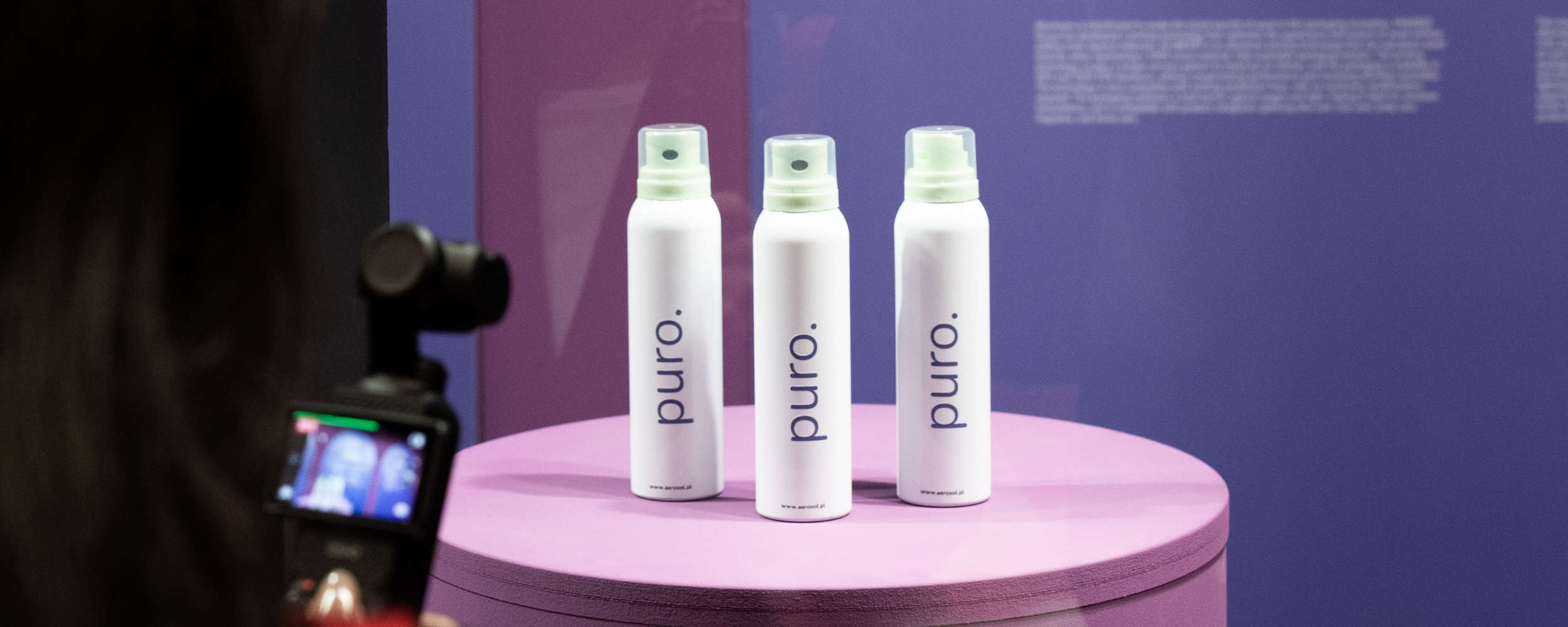
PURO in the finals of the Cosmopack Awards 2026 – the Aerosol Service innovation recognized on the international stage