Manufacturer or technology partner? How the role of contract companies has changed in recent years – an interview with Sylwia Przybysz, Key Account Manager at Aerosol Service.
Sylwia, you have been working at Aerosol Service for many years. Can you tell us about your career path at the company and what changes you have observed in the industry during that time?
During my years at Aerosol Service, I went through several key stages that allowed me to become very familiar with the specifics of this business. I started at a time when the contract manufacturing market was mainly based on implementing ready-made guidelines from customers. At that time, the most important thing was to precisely reproduce the recipe and maintain stable production quality.
It was then that I learned about aerosol technology and understood that precision at the production stage is the absolute foundation of customer trust. The turning point for me was the transition to direct service for key business partners. That's when I began to have a real impact on the shape of the services we offer and the way we build relationships with customers.
Today, my role is primarily to be a "bridge" between the customer's vision and the capabilities of our factory. It's a very interesting perspective because it allows me to watch an idea gradually turn into a finished product.
The biggest change I see from the perspective of these years is the transition from the role of contractor to the role of co-creator of the product. We used to wait for a ready-made recipe from the customer. Today, we invite partners to our laboratory and design solutions together from scratch. It's a completely different level of cooperation and a great satisfaction from work.
The issue of ecology has also brought about a huge transformation. Just a few years ago, it was more of a curiosity in product catalogs. Today, it is one of the main topics of every business conversation and one of the most important directions of technological development.
Project management has also changed. Process digitization, integrated planning systems, and supply chain management have enabled us to work faster, more transparently, and coordinate projects much more efficiently.
At the same time, the importance of certification and quality standards has increased significantly. In the past, they were welcome, but today they are an absolute prerequisite for presence in many international markets. This has forced the entire industry to make a huge leap in quality.
Thanks to these changes, working at Aerosol Service after so many years still remains an inspiring challenge for me. Each project has a different story, a different market context, and different customer expectations.
And how have customer expectations towards contract manufacturers changed over the years?
We are seeing a very clear evolution in customer expectations. Previously, the "make and deliver" model dominated. Today, there is increasing talk of strategic partnerships, in which the contract manufacturer becomes a co-creator of the product and a technology advisor.
Just a few years ago, customers were primarily looking for production capacity and cost optimization. Today, they expect much more—support during the product design stage, technological consulting, and often assistance with product launch.
Digitization also plays a major role. Modern contract manufacturers must use advanced automation, robotics, and IT systems to support production. Today's customers want access to real-time information about the status of their orders, and process transparency has become the norm.
The dynamics of the market have also changed. Trends appear and disappear much faster than they used to, so manufacturers must be prepared for greater personalization and the ability to quickly scale up production.
After the experience of the pandemic, supply chain resilience has also become extremely important. Today's customers expect active risk management and diversification of raw material sources.
However, the biggest change remains the approach to sustainable development. In the past, ecology was often treated as an additional marketing asset. Today, it is an absolute prerequisite for cooperation. Customers expect the use of renewable energy sources, waste reduction, and transparent reporting of environmental activities.
On a daily basis, you mainly work with clients from Germany, Austria, and Switzerland. How would you describe the specific nature of this market?
The German-speaking market is one of the most demanding, but also one of the most stable for contract manufacturers. The key to cooperation is understanding that quality and timeliness are not treated as a competitive advantage there—they are an absolute standard.
Customers from this region attach great importance to precision and documentation. Technical specifications are very detailed, and each stage of production must be fully predictable. Even slight deviations from the agreed parameters can be considered a serious problem.
Directness in communication is also characteristic. If there is a delay or risk of a problem, the customer expects immediate information and a specific action plan.
The process of building relationships usually takes a long time, as business partners must be thoroughly vetted—often through audits and detailed process analysis. However, once cooperation begins, these customers are very loyal and focused on long-term relationships.
An additional challenge is the huge number of formal and certification requirements. In many cases, customers expect standards that go beyond the basic ISO norms. In the case of Switzerland, there are also additional customs and legal regulations.
Have you noticed any changes in these customers' attitudes toward innovation and ecology in recent years?
Definitely yes. Customers in the DACH region are increasingly looking for technology partners rather than just manufacturers offering the lowest price.
Ecology is no longer just a marketing slogan. Today, customers expect specific data, certificates, reports, and realistic calculations regarding carbon footprints and the use of recycled materials.
Rising energy costs and inflation also have a significant impact on business decisions. For this reason, companies are increasingly looking for savings through technological innovation. They expect contract manufacturers to be able to offer solutions that enable faster, cheaper, or more efficient production.
In recent years, we have also seen a clear trend toward shorter supply chains. Many customers from Germany, Austria, and Switzerland, after their experiences with deliveries from Asia, have begun to prefer production closer to the target market. Poland has become a very attractive location in this context.
We are also increasingly encountering expectations for joint product design. Customers want to work with a partner who brings technological expertise to the project and helps develop the product, rather than just implementing ready-made guidelines.
What does Key Account Customer Service at Aerosol Service look like in practice today?
At Aerosol Service, the process of serving key customers has evolved towards a business partnership model. In practice, this means that cooperation often begins at the product concept stage and covers all subsequent stages—from formulation development, through testing and production, to logistics.
The Key Account Manager plays a key role here, coordinating cooperation between the customer and the company's internal teams. In our organization, customer service is a team effort. The research and development department, laboratory, planning department, logistics department, and quality assurance department are all involved in the projects.
This approach allows us to efficiently translate the client's business needs into specific technological and production solutions.
And which elements of the organization are key in everyday cooperation with the customer?
The most important element is close cooperation between departments. The Key Account Manager acts as the coordinator of the entire process, but a team of specialists from various areas of the company is responsible for the success of the project.
The research and development department and the laboratory are responsible for developing recipes and selecting components. Planning and logistics manage the production schedule and the availability of raw materials. The quality assurance department, on the other hand, ensures that processes comply with the required standards and prepares documentation, which is particularly important for customers in the DACH region.
Cooperation is also supported by technological tools, such as an ERP system, which allows all departments to work on a single, up-to-date database. Regular operational meetings and clearly defined areas of responsibility help to maintain smooth workflow on more complex projects.
What business role do trade fairs such as Cosmoprof in Bologna or PLMA in Amsterdam play?
For Aerosol Service, these are very important events in the business calendar. Participation in these trade fairs allows us to achieve several goals at once: develop relationships with existing partners, present new technologies, and acquire new customers.
PLMA in Amsterdam is particularly important from the point of view of the development of the private label segment. It is a place where we can showcase our full production capabilities – from formulation development to the finished product on the store shelf.
Cosmoprof in Bologna, and especially its Cosmopack section, is a platform for presenting technological innovations. Thanks to our presence at such events, we can showcase ourselves not only as a manufacturer, but also as a technology partner developing new solutions in the aerosol industry.
How do customers respond to new technologies and innovations proposed by Aerosol Service?
Customers are very open to innovation, but there is always one key question: is the solution cost-effective? The technologies that generate the most interest are those that combine an eco-friendly approach with competitive pricing.
Solutions that reduce the amount of plastic or aluminum in packaging and use recycled materials are very popular. More and more companies are also interested in refill systems that allow consumers to reuse part of the packaging.
Another important trend is changes in propellant technology, particularly Bag-on-Valve solutions. These make it possible to separate the product from the propellant and use compressed air or nitrogen instead of traditional gases. For many customers, this is an attractive alternative in terms of both environmental friendliness and safety of use.
Finally, how do you see the future of contract manufacturing in the cosmetics and household chemicals industry?
I think that the future of this market will be based on even closer cooperation between brands and contract manufacturers. The line between manufacturing and strategic partnership will become increasingly blurred.
Contract manufacturers will act as centers of technological innovation. More and more brands will come to manufacturers asking for ready-made, proven technological solutions instead of developing their own recipes.
At the same time, manufacturers will take on increasing responsibility for environmental and regulatory issues. Faced with a growing number of regulations, they will be responsible for ensuring product compliance with standards and conducting environmental reporting.
The market will also become increasingly dynamic, which is why production flexibility will become extremely important. Contract manufacturers will have to respond quickly to changing trends and adapt their production lines to new products in a short period of time.
The result is a collaborative model in which the brand contributes the idea and vision for the product, while a professional partner—such as Aerosol Service—takes care of everything else: from research and technology to production and regulatory compliance.
See other news
See other articles
Read on our blog
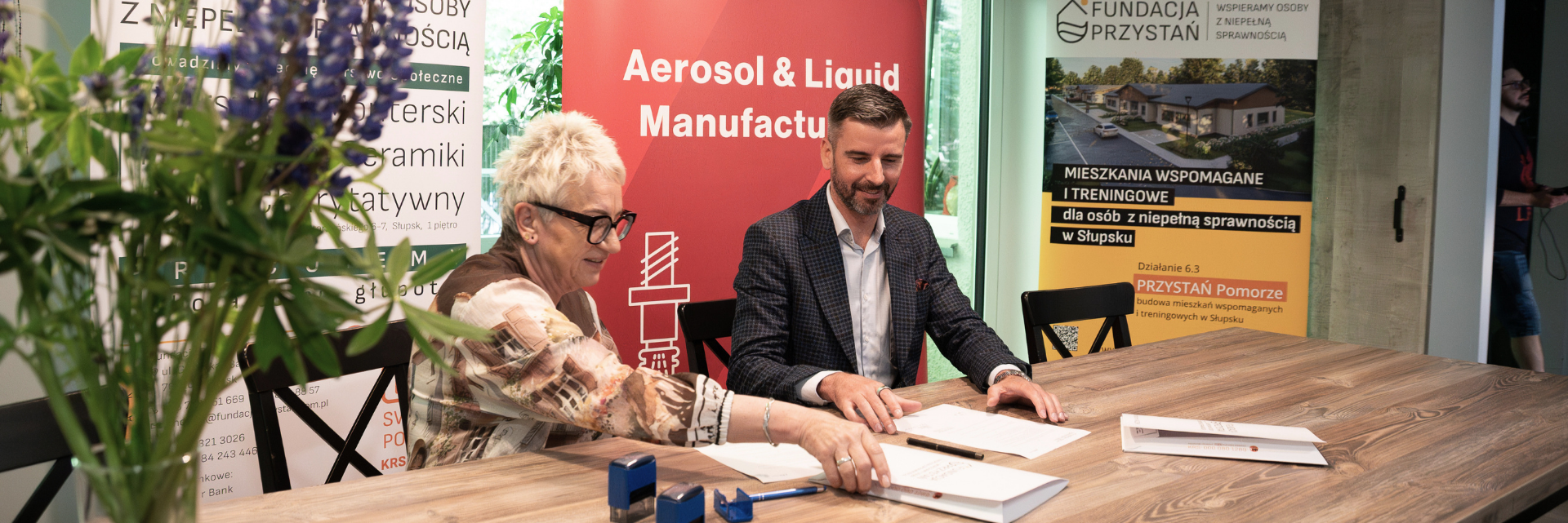
Aerosol Service is a Patron of the Przystań Foundation
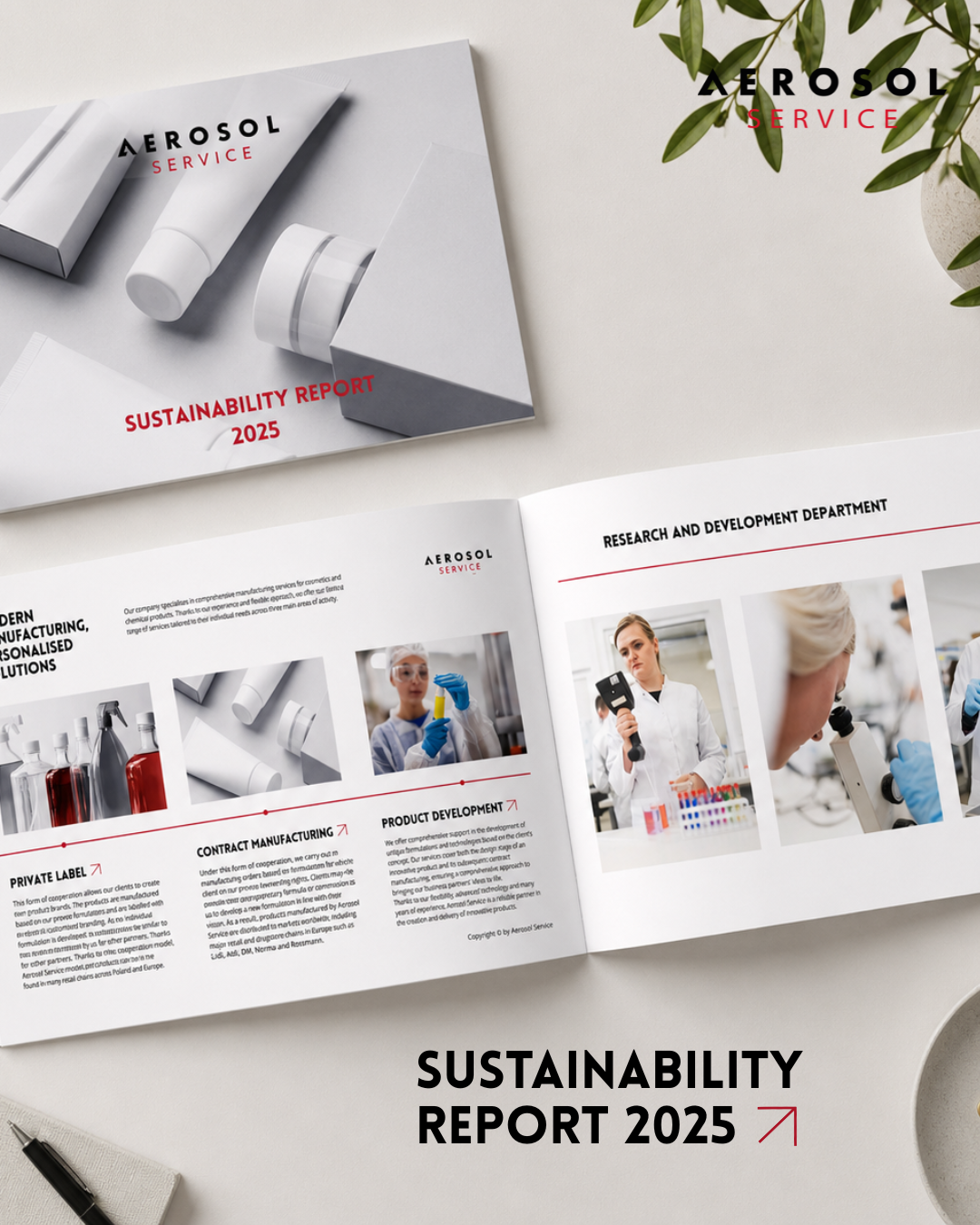
2025 Sustainability Report