Quality is not a cost. It's a value that builds advantage: an interview with Matthew Rzepka- Quality Control Manager at Aerosol Service
1 How do you define the role of the Quality Control department in the entire production process in a company like Aerosol Service?
The Quality Control department is a kind of "trust keeper" - we are responsible not only for checking the compliance of products with standards and customer requirements, but also for early detection of risks and supporting improvement processes. Our role starts as early as at the stage of raw materials and components, and includes the inspection of production in progress, as well as the final verification of the quality of finished products. In this way, we build a foundation of safety, repeatability and high quality.
2. In your opinion, what are the key competencies that an effective Quality Control team should have?
I put attentiveness and responsibility first - because these are the qualities that allow you to act precisely and consistently. Also important is openness to change and possible deviations, and willingness to cooperate with other departments. Also of great importance is the speed of decision-making, which in our production system is even crucial for the smooth functioning of the whole. Today, quality control requires not only technical knowledge, but also the ability to anticipate, efficient communication, and a proactive approach to problem solving.
3 How does the Quality Control department support the company's strategic goals - not only in terms of safety, but also in terms of efficiency and innovation?
We work in such a way that quality is not just a "cost", but mainly an added value. By analyzing data, monitoring trends and learning from non-conformities, we support the optimization of production processes. Our activities reduce losses, improve information flow and implement new technological solutions with the highest safety standards.
4. In 2024, you started the process of joint supplier audits with the Purchasing Department - what did this cooperation look like and what were the most important results?
This was an important step towards even better understanding of the supply chain and building partnerships with suppliers. The joint audits allowed us to combine the quality and purchasing perspectives - so we can identify areas for improvement faster and work with suppliers to implement them. The result is more transparent processes, faster response times and better quality of deliveries. During such audits, we also share mutual insights, exchange ideas, and compare experiences to function better together. An audit is not only a confirmation of compliance with requirements, it is also an opportunity for mutual support to the benefit of both parties.
5 How does the Quality Control department work with production in terms of resolving current nonconformities?
The key is a rapid flow of information and a partnership approach. We have an integrated internal system for reporting nonconformities, which, in addition to providing accurate data on current issues, allows us to analyze them later on a long-term basis. We focus on ensuring that each nonconformity is resolved as quickly as possible, and analyzed as thoroughly as possible - not only in the context of a single case, but also in terms of recurring problems. In this way, we can not only eliminate the effects, but can also prevent problems from recurring in the future.
6. 2025 AS has taken steps to improve the quality of complaints and communication with customers. Are there visible results from these measures?
The process is still in progress, so we still have to wait a while for the final results. Nevertheless, our goal is to standardize and automate the way we obtain data for all notifications, even small ones, and standardize the process of analyzing them. We are currently testing ways to expand the current claims process, but we are also testing potentially new solutions. All of this is aimed at ensuring that our customers receive the highest satisfaction from working with Aerosol Service.
7 What approach do you take when analyzing complaints - do you try to treat them as a source of knowledge for further improvement?
We treat complaints as a very important development tool. Each customer feedback is an opportunity to look critically at our own processes and make changes that build competitive advantage in the long run. In fact, every complaint, even the smallest one, allows us to improve and provide increasingly higher quality services.
8 What is the importance for the team of implementing standards such as COSMOS and how do they affect daily inspection activities?
COSMOS is another level of confirmation of product quality and safety for us. These standards put many processes in order - from input inspection of raw materials to final labeling - while at the same time strengthening the confidence of customers, especially those looking for natural and organic products. In practice, this means more precise verification of processes and greater awareness among the entire team.
9 How do you ensure compliance with standards such as IFS, ISO 9001 or others - both formally and in practice?
On the one hand, we have well-developed procedures, instructions and documentation. On the other hand, the daily attitude and awareness of the team is equally important - that's why we regularly conduct training and internal audits. As a result, standards are not just "paper", but realistically function at every stage of work.
10. What priorities and changes are you planning for 2025 and beyond in the area of quality control and cooperation with other departments?
We plan to develop the digitalization of control processes, which is basically already happening. We are abandoning some archaic solutions in favor of system records, which greatly accelerate and facilitate everyone's work. We are reacting to ideas and comments from other departments, as all of us at AS are one big team and share a common goal.
11. What development directions do you see for your department - both in terms of technology and people?
I see a lot of potential in the automation of quality control - for example, the use of vision and weighing systems, or real-time data analysis. At the same time, we will invest in developing the competence of the entire team, and in the right equipment - because effective quality control requires both modern tools and a committed, informed team. We've also had two internal promotions in the KJ department this year, which only shows that we're also growing personally, and we're betting on the most important element in this whole puzzle - people.
See other news
See other articles
Read on our blog

Aerosol Service is ISO 14001:2015 certified – a testament to the highest standards of environmental management
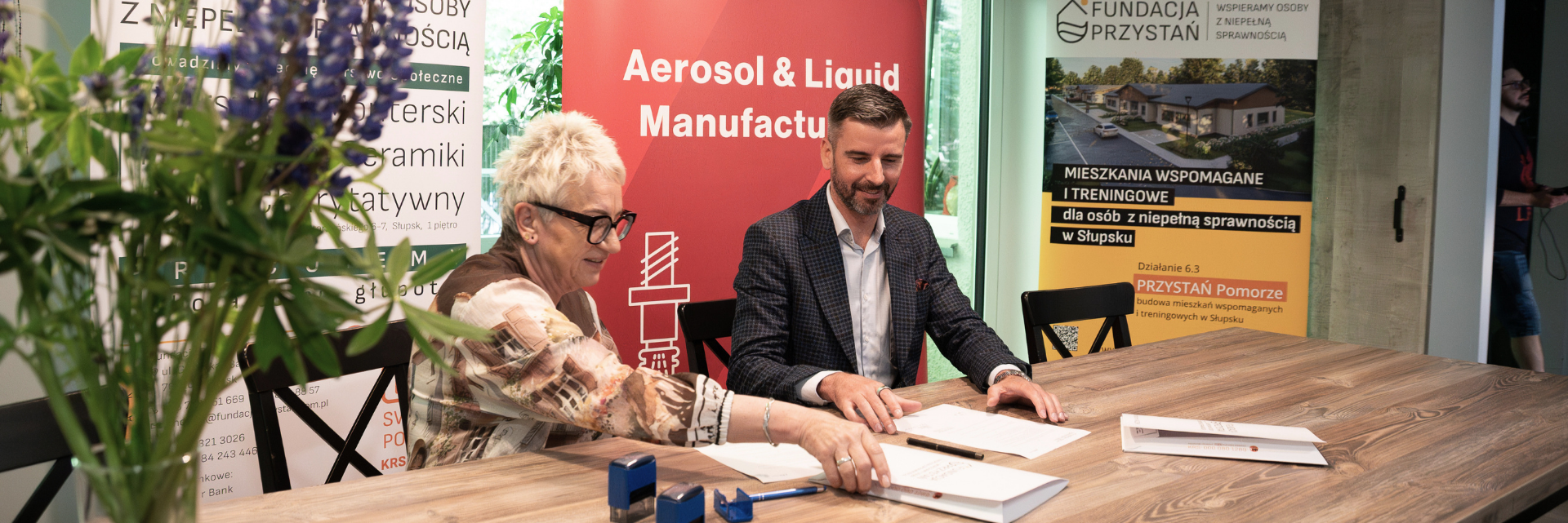
Aerosol Service is a Patron of the Przystań Foundation